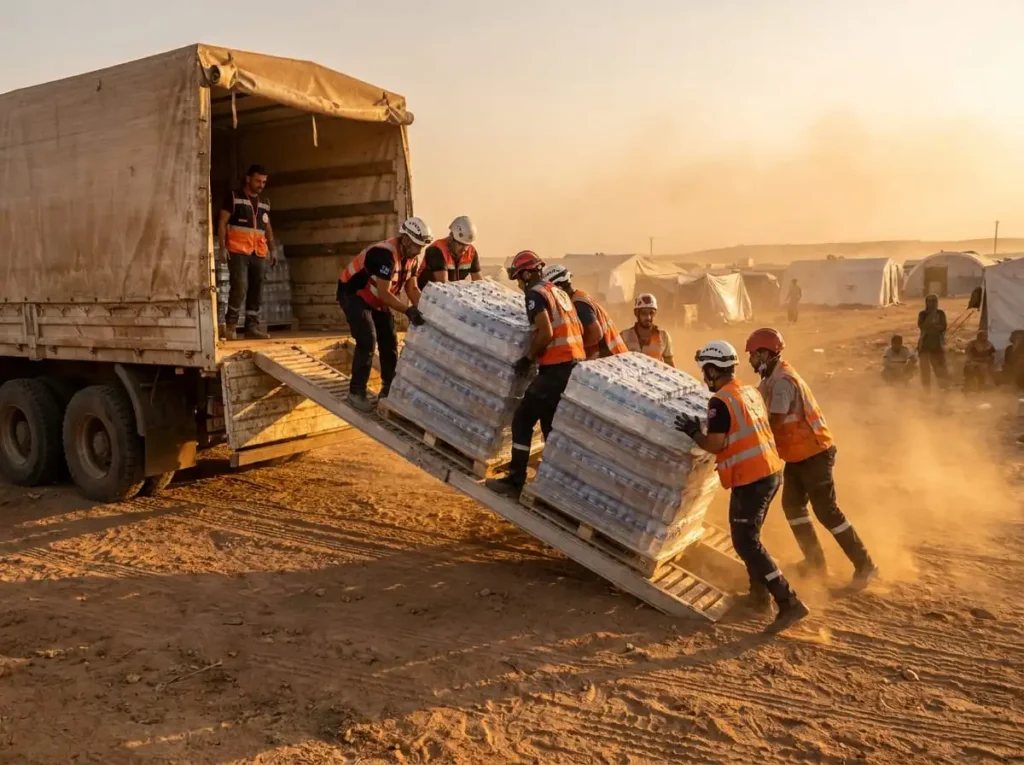
Emergency water logistics haven’t evolved fast enough. While other industries have embraced innovation, many emergency response plans still rely on the same outdated approach: stockpiling bottled water and hoping supply chains hold up when disaster strikes.
The reality is that traditional water logistics are expensive, inefficient, and vulnerable. Roads become impassable, infrastructure fails, and bottled water supplies run out when they’re needed most.
At H2O Everywhere, we believe there’s a better way. Our atmospheric water generation (AWG) technology produces clean drinking water directly from the air, providing an independent water source wherever traditional infrastructure is unavailable, unreliable, or compromised.
Whether you manage a government agency, military installation, industrial facility, healthcare campus, or emergency response operation, avoiding these seven common mistakes can help strengthen your water resilience.
Calling in water tankers may seem like the obvious backup plan, but what happens when roads are flooded, blocked by debris, or otherwise inaccessible?
A delivery-based strategy only works if transportation remains available—which is often not the case during major emergencies.
Instead of waiting for water to arrive, generate it on-site.
H2O Everywhere’s AWG systems extract moisture directly from the atmosphere to produce clean drinking water wherever they’re deployed. Even if pipelines fail or transportation is disrupted, your water supply remains available.
Many organizations maintain large emergency water reserves to meet regulatory requirements. While necessary, bottled water presents ongoing challenges:
For large facilities, these recurring expenses add up quickly.
Atmospheric water generation provides a renewable source of drinking water without constant replenishment.
Instead of rotating pallets of bottled water every few months, facilities can produce fresh drinking water on demand, reducing storage requirements while improving long-term resilience.
Clean water isn’t just about availability—it’s also about quality.
Growing concerns around PFAS, microplastics, and aging municipal infrastructure have highlighted the limitations of relying solely on bottled or tap water during emergencies.
H2O Everywhere systems combine proprietary atmospheric water extraction with advanced purification technology to produce high-quality drinking water at the point of use.
The result is a dependable source of clean water without relying on aging infrastructure or disposable plastic bottles.
Water main failures, natural disasters, infrastructure damage, and utility outages can interrupt service with little warning.
If your contingency plan depends entirely on the municipal water system, your operation remains vulnerable.
Create redundancy.
Integrating atmospheric water generation into your facility creates an independent water source that continues operating even when municipal systems are compromised.
Emergency water is often stored in warehouses, loading docks, or outdoor environments where prolonged heat and sunlight can affect storage conditions.
Managing large water inventories also requires ongoing inspection and replacement.
Generate fresh drinking water whenever it’s needed.
Instead of relying on long-term storage, H2O Everywhere systems produce, purify, and store water on-site, reducing inventory management while ensuring a consistent supply.
The true cost of bottled emergency water extends far beyond purchasing the bottles themselves.
Organizations must also account for:
These recurring expenses impact both budgets and sustainability goals.
Atmospheric water generation reduces dependence on single-use plastic bottles by producing drinking water where it’s needed.
The result is a more sustainable, cost-effective approach to emergency water planning.
Many emergency water solutions are fixed in place.
Disasters aren’t.
Response teams often need clean drinking water in rapidly changing environments where permanent infrastructure doesn’t exist.
H2O Everywhere offers mobile atmospheric water generation systems that can be trailer-mounted and deployed directly to disaster zones, military operations, humanitarian missions, and remote worksites.
Instead of transporting bottled water, responders can transport the ability to produce water on demand.
Emergency preparedness is no longer just about storing supplies—it’s about building resilient infrastructure.
From local emergency management agencies and military installations to industrial facilities and municipalities, organizations need water solutions that remain operational when traditional systems fail.
H2O Everywhere’s atmospheric water generation technology helps reduce dependence on vulnerable supply chains by producing clean drinking water directly from the air—wherever it’s needed.
As emergency planning continues to evolve, independent water generation offers a smarter, more sustainable approach to protecting communities, supporting critical operations, and ensuring access to one of our most essential resources.
Ready to strengthen your emergency water strategy? Contact H2O Everywhere to learn how atmospheric water generation can provide reliable, independent drinking water for your organization.
The original draft had good ideas, but a few things reduced its effectiveness:
The revised version broadens the audience, improves flow, and is better suited for a professional B2B audience while remaining SEO-friendly.
Emergency water logistics haven’t evolved fast enough. While other industries have embraced innovation, many emergency response plans still rely on the same outdated approach: stockpiling bottled water and hoping supply chains hold up when disaster strikes.
The reality is that traditional water logistics are expensive, inefficient, and vulnerable. Roads become impassable, infrastructure fails, and bottled water supplies run out when they’re needed most.
At H2O Everywhere, we believe there’s a better way. Our atmospheric water generation (AWG) technology produces clean drinking water directly from the air, providing an independent water source wherever traditional infrastructure is unavailable, unreliable, or compromised.
Whether you manage a government agency, military installation, industrial facility, healthcare campus, or emergency response operation, avoiding these seven common mistakes can help strengthen your water resilience.
Calling in water tankers may seem like the obvious backup plan, but what happens when roads are flooded, blocked by debris, or otherwise inaccessible?
A delivery-based strategy only works if transportation remains available—which is often not the case during major emergencies.
Instead of waiting for water to arrive, generate it on-site.
H2O Everywhere’s AWG systems extract moisture directly from the atmosphere to produce clean drinking water wherever they’re deployed. Even if pipelines fail or transportation is disrupted, your water supply remains available.
Many organizations maintain large emergency water reserves to meet regulatory requirements. While necessary, bottled water presents ongoing challenges:
For large facilities, these recurring expenses add up quickly.
Atmospheric water generation provides a renewable source of drinking water without constant replenishment.
Instead of rotating pallets of bottled water every few months, facilities can produce fresh drinking water on demand, reducing storage requirements while improving long-term resilience.
Clean water isn’t just about availability—it’s also about quality.
Growing concerns around PFAS, microplastics, and aging municipal infrastructure have highlighted the limitations of relying solely on bottled or tap water during emergencies.
H2O Everywhere systems combine proprietary atmospheric water extraction with advanced purification technology to produce high-quality drinking water at the point of use.
The result is a dependable source of clean water without relying on aging infrastructure or disposable plastic bottles.
Water main failures, natural disasters, infrastructure damage, and utility outages can interrupt service with little warning.
If your contingency plan depends entirely on the municipal water system, your operation remains vulnerable.
Create redundancy.
Integrating atmospheric water generation into your facility creates an independent water source that continues operating even when municipal systems are compromised.
Emergency water is often stored in warehouses, loading docks, or outdoor environments where prolonged heat and sunlight can affect storage conditions.
Managing large water inventories also requires ongoing inspection and replacement.
Generate fresh drinking water whenever it’s needed.
Instead of relying on long-term storage, H2O Everywhere systems produce, purify, and store water on-site, reducing inventory management while ensuring a consistent supply.
The true cost of bottled emergency water extends far beyond purchasing the bottles themselves.
Organizations must also account for:
These recurring expenses impact both budgets and sustainability goals.
Atmospheric water generation reduces dependence on single-use plastic bottles by producing drinking water where it’s needed.
The result is a more sustainable, cost-effective approach to emergency water planning.
Many emergency water solutions are fixed in place.
Disasters aren’t.
Response teams often need clean drinking water in rapidly changing environments where permanent infrastructure doesn’t exist.
H2O Everywhere offers mobile atmospheric water generation systems that can be trailer-mounted and deployed directly to disaster zones, military operations, humanitarian missions, and remote worksites.
Instead of transporting bottled water, responders can transport the ability to produce water on demand.
Emergency preparedness is no longer just about storing supplies—it’s about building resilient infrastructure.
From local emergency management agencies and military installations to industrial facilities and municipalities, organizations need water solutions that remain operational when traditional systems fail.
H2O Everywhere’s atmospheric water generation technology helps reduce dependence on vulnerable supply chains by producing clean drinking water directly from the air—wherever it’s needed.
As emergency planning continues to evolve, independent water generation offers a smarter, more sustainable approach to protecting communities, supporting critical operations, and ensuring access to one of our most essential resources.
Ready to strengthen your emergency water strategy? Contact H2O Everywhere to learn how atmospheric water generation can provide reliable, independent drinking water for your organization.